Search results for tag "Prayer" - 10 answer(s)
252
Vote
“What is prayer? What purpose does it serve? What is its role in the process of spiritual perfection? Under what conditions can one best benefit from prayer? This lab aims at helping you better understand the goal, the effects and the conditions of prayer, and make the practice of prayer part of your daily life.”
Here is the introductory description of the brand new lab hosted by the website OstadElahi inPractice, an organisational platform for the practice of ethics and spirituality that we introduced here when it launched in July. After a first general lab entitled Toward an in vivo practice, which you may have already tried out this summer, this second curriculum entitled Connecting with the Divine, introduces us to the essential role of prayer.
Read more
274
Vote
 I am convinced that prayer constitutes a fundamental experience and an essential reality. I have, however, always had some difficulty with it. My acquaintance with the writings of a large number of “explorers” of the spiritual world (from various origins and religions) have convinced me a long time ago of the importance of this slightly disconcerting act. Those readings used to always trigger the same emotion in me. I would sense that prayer meant breathing the perfumes of the “homeland” (as Saint Thérèse of the Child Jesus could have put it) or communicating with the World of the Truth (to use a different vocabulary). In practice, however, my prayer would not even come close to the emotions inspired by these beautiful texts. I had learned some prayers and picked a couple that I would try to recite on a regular basis and with as much attention as possible. Once in a while, I would also experience those fleeting impulses towards the One who is usually referred to as God, or towards those who knew how to speak of Him. But I knew these were all just babblings, attempts that did not reach their goal. I aspired to more.
Read more
408
Vote
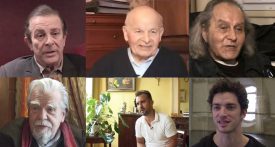
What is prayer? What function does it have in our lives and how do we practice it? E-ostadelahi.com drew a few questions on this theme from interviews conducted with six public figures. From the actor to the priest, to the intellectual, to the dancer, all answer these questions in their own words.
Following this video, you too will have the opportunity to define the personal meaning you give to prayer by participating in a short poll.
Read more
245
Vote
What is prayer? What role does it play in the process of spiritual perfection and what inner state does it require? These are some of the questions addressed by Bahram Elahi in Chapter 29 of The Path of Perfection, which is dedicated to prayer. Here is an excerpt.
If we envision Him as face-to-face with us while praying, we would not speak to Him inattentively.
Human beings, even those with faith, tend to forget the Source unless they are in situations of need or distress. The goal of prayer is to prevent this forgetfulness and to maintain our communication with the Source.
Read more
1987
Vote
Prayer is the most universal spiritual practice. It connects the spirit of human beings to the Divine, thus preventing them from forgetting Him. But it also enables one to revert back to oneself, to one’s true dimension, which is spiritual in nature.
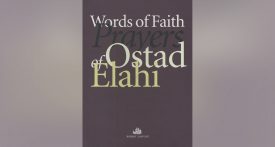
Ostad Elahi practiced prayer in various forms since childhood and referred to the essential conditions of prayer many times in his works. Some of his recommendations regarding prayer can be found in Words of Faith: Prayers of Ostad Elahi, which was published on the occasion of the centennial of his birth.
Read more
309
Vote
Anyone who has ever been in love has had that experience when thinking about the person they love: the sensation of the presence of the beloved can fill up your mental space to such an extent that it will accompany you at every moment and in every situation. When you are in love, this presence settles within you automatically and effortlessly. It can even be reflected around you in the smallest events. If you are not in love, you can still stir up a similar experience by directing your thought toward someone and attempt to develop positive feelings toward them and thereby experience the “presence” of this person. Such experiences are internal and multiform, and can be more or less intense depending in particular on how much attention we pay to them.
Read more
504
Vote
The following poem is extracted from the Book of the Kings of Truth, written in 1919 by Ostad Elahi’s father, Hadj Nemat. Composed from more than 15000 verses, this book recounts the life of the saints, prophets, and great spiritual figures of humanity. Narrative sequences alternate with more meditative passages in the form of prayers, […]
Read more
476
Vote
In elaborating proofs for God’s existence, oriental and occidental philosophers alike did not necessarily intend to instil faith in those who were lacking it. When he wrote chapter 1 of Knowing the Spirit, which deals exclusively with this very question, Ostad Elahi was well aware that none of the arguments he presented could actually prove […]
Read more
519
Vote
Generosity, for one who is so inclined by nature or by habit, is relatively undemanding, for it does not require any costly sacrifice. It is quite another matter when ethical concern requires us to renounce a pleasure or craving, or when it runs up against a selfish nature. To overcome such resistance, willpower alone does not always suffice. When self-denial costs us something, we require the aid of a particular type of energy, one that is also known as “grace”.
Read more
392
Vote
The purpose of life? To reach perfection, Ostad Elahi answers. To lead your soul to maturity, a state in which you perfectly control your impulses while respecting your very nature. A state that is the prime condition of inner freedom. Granted, perfection is to be attained, but how? Through action, Ostad Elahi insists, and he reminds us that in this matter as in many others, “practice makes perfect.” For while thinking and talking may awaken the desire to change and may help us find ways that can lead to this change, contemplating a virtue is not enough to actually develop one. It is imperative that action take over from words and lead to practice. But not just any kind of practice.
Read more
|

 News
News Podcast







Recent Comments